

The Martindale Test is the undisputed global benchmark for assessing the wear resistance of textile surfaces. Whether a fabric is intended for high-fashion apparel or heavy-duty industrial upholstery, its durability is defined by its performance under this specific rubbing protocol. However, simply owning the equipment is not enough; a laboratory must strictly adhere to the established Martindale Abrasion Test Method to ensure that results are valid, reproducible, and compliant with international trade requirements. This article provides an in-depth look at the procedures that make the Martindale Test so reliable.
Preparation and Conditioning: The Foundation of the Method
The Martindale Abrasion Test Method begins long before the machine is turned on. Because textile fibers are hygroscopic—meaning they absorb moisture from the air—their strength and friction characteristics change based on the environment. Therefore, the first step in any Martindale Test is conditioning. Samples must be placed in a controlled atmosphere of 20°C (±2°C) and 65% (±4%) relative humidity for at least 24 hours. Failure to do this can lead to variations in results that make the data scientifically useless.
Once conditioned, the specimens are cut using a precision circular cutter. According to the Martindale Abrasion Test Method, multiple samples must be taken from different areas of the fabric roll (avoiding the edges) to ensure the test reflects the average quality of the batch. These specimens are then mounted into the holders with a backing of standard polyurethane foam or felt, depending on the specific standard being followed (such as ISO 12947). The precision of the mounting is crucial; any wrinkles in the fabric will cause premature wear and an inaccurate Martindale Test result.
Executing the Martindale Abrasion Test Method
The core of the Martindale Test involves rubbing the specimen against a standard abradant—usually a worsted wool fabric—in a Lissajous pattern. This pattern is a complex geometric curve that ensures the friction is applied to the warp, weft, and bias of the fabric. The Martindale Abrasion Test Method specifies the exact pressure to be applied: 9 kilo-pascals (kPa) for apparel fabrics and 12 kPa for upholstery.
As the machine runs, the technician must pause the Martindale Test at regular intervals to inspect the fabric. The “end point” of the abrasion test is reached when two or more threads in a woven fabric break, or when a hole appears in a knitted fabric. For pilling tests, the Martindale Abrasion Test Method focuses on the formation of surface fuzz and pills, which are then graded against a set of standard photographs. This systematic approach ensures that every Martindale Test performed worldwide follows the same rigorous logic.
The Impact of Equipment Precision on Results
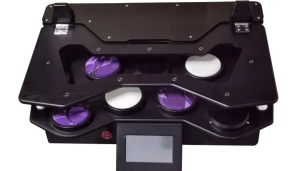
The reliability of the Martindale Abrasion Test Method depends heavily on the machine’s ability to maintain the Lissajous pattern perfectly. Older mechanical machines often suffer from “drift,” where the pattern becomes distorted over time. Modern digital machines, like the ChiuVention Smartindale, use servo motors and internal sensors to ensure the motion is 100% accurate. This technological precision is what allows the Martindale Test to remain the gold standard; without it, the Martindale Abrasion Test Method would be subject to too much mechanical variability.
Furthermore, digital integration allows for better tracking of the test cycles. A technician no longer needs to manually watch the counter; the machine can be programmed to stop at specific intervals for inspection. This automation reduces the likelihood of “over-testing,” where a sample passes its failure point because the technician wasn’t present. By combining a strict Martindale Abrasion Test Method with advanced hardware, laboratories can provide the highly accurate data that global brands require to guarantee the longevity of their products.


More Stories
Looking to Get a Tattoo Near Me? Here is How to Find the Perfect Studio
Fun Indoor Laser Tag Arenas for Families in Singapore
Yoga Wear Manufacturer Offering Quick Turnaround Times